panagenda is proud to announce this new release of iDNA Applications. Whether you’re in a Notes/Domino modernization or migration project, iDNA gives you the knowledge to deliver the most difficult projects efficiently, on time and on budget. This new version is mainly a maintenance release, but brings a lot of value with new features, improvements and bug fixes.
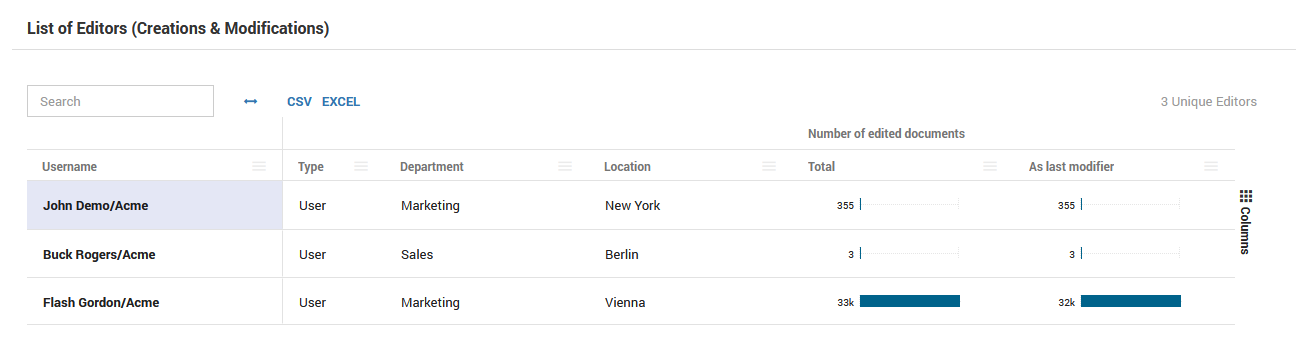
The list of document editors in the Content Analysis area of database details now holds information about user department and location. This new feature is especially useful when user names have to remain pseudonymized due to data protection regulations.
A new dashboard named "Advanced: User Activity Drill-down Analysis" has been added and can be accessed in the menu under "Usage" → "By User". The main reason for adding the dashboard was the need to dynamically answer the question: "Which users have accessed which type of applications in what time period?". Not surprising, these factors are weighed differently at different customers. Especially the period of time it takes for an employee to count as "inactive".
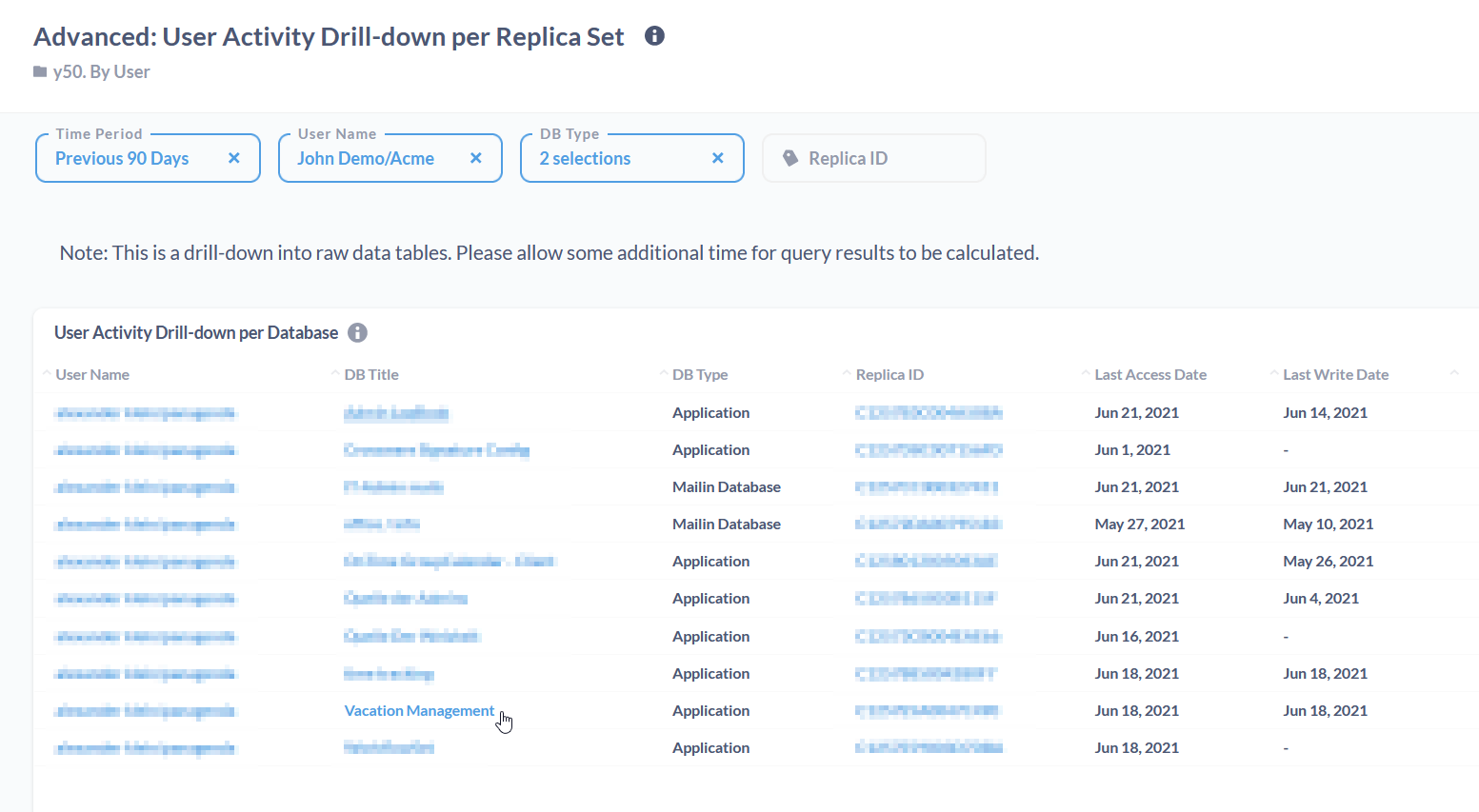
That is not all, however. The dashboard allows a drill-through to the replica set level directly from within the table. This enables asking of the followup question "Who else used this database in which time period?"
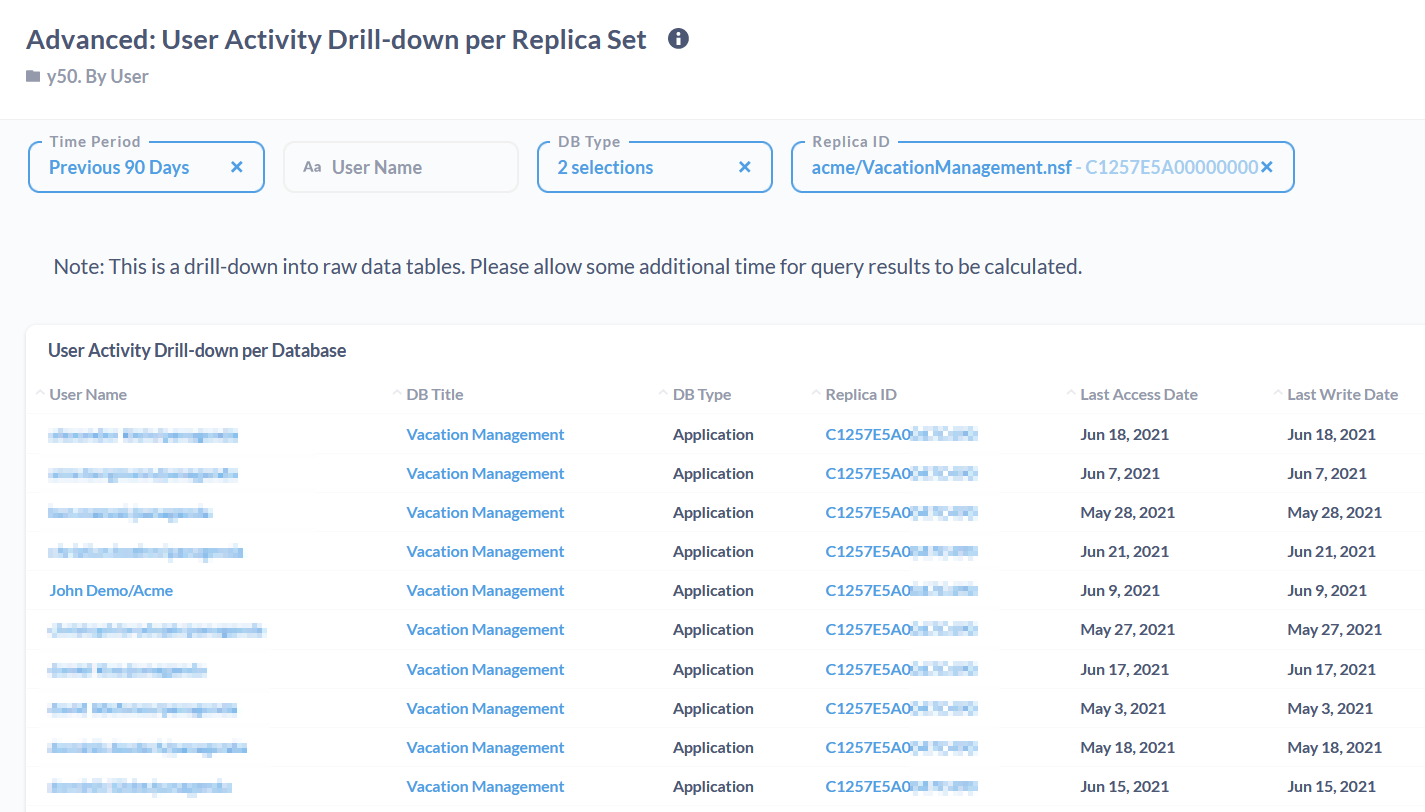
Questions along this line of thinking are extremely valuable when it comes to identifying application owners and stakeholders.
DB Type Re-categorization: It is now possible to prioritize DB re-categorization rules higher, by adding a * at the beginning of their name. This works on four levels, with three leading asterisks as the highest priority and the current non-astersik format as the least prioritized.
For example: the rule named "***Highest Priority" will be prioritized over "**Higher Priority", which again is prioritized over "*High Priority". All of these are prioritized over the rule named "Normal Priority".
DB Type Re-categorization: It is now possible to prioritize DB re-categorization rules higher, by adding a * at the beginning of their name. This works on four levels, with three leading asterisks as the highest priority and the current non-astersik format as the least prioritized.
For example: the rule named "***Highest Priority" will be prioritized over "**Higher Priority", which again is prioritized over "*High Priority". All of these are prioritized over the rule named "Normal Priority".
Department/Location Import: An advanced feature has been added that allows to programmatically manipulate collected department and location data during automatic processing. To use this new hook function, please contact support@panagenda.com.
Department/Location Processing: This new version now makes a clearer distinction on which users get the department/location "Comany [ID: 1]" and "Unknown [ID: -1]". ID 1 are all users that cannot be linked to a specific department, but have person records in the Domino Directory and can thus be linked directly to the top level organization. ID -1 is the unknown department/location for users where activity is present, but they cannot be linked to the current organization structure via the Domino Directory. A typical example for who would fall under ID -1 would be users that are no longer with the company. Thus it is easier to distinguish between the "current users" and the "users who were active in the past".
Content Analysis: Attachment extensions were previously treated case sensitive. While a case can be made that technically that makes sense, the overwhelming feedback of our customers and partners has been to treat it case in-sensitive. For example: if a document has two attachments FILE1.PDF and File2.Pdf, they will both be processed a single category "pdf", rather than two separate ones.
Domino Binaries: iDNA now uses HCL Domino 11 FP3 components to perform design exports. Due to fixes in DXL exporter code, that should result in significantly less databases with design scan errors.
General UI: A potential issue with caching has been fixed. This bug could lead to outdated data being displayed in the user interface.
Catalog Grids: An issue has been resolved that lead to several dates (e.g. Last Access, Last Write) in catalog grids to be displayed incorrectly due to double time zone conversion.
Catalog Grids: A bug has been resolved that lead to the first column header of an Excel export being empty. The data for column "Title" itself was present, but in the header text was empty.
DB Type Categorization: Deleted databases will now be excluded from calculations while trying to determine the correct DB Type for a replica set. In rare situations this could lead to incorrect categorization.
Agent List Processing: A potential issue has been fixed where nightly processing of agent data could crash in case of invalid date content.
Docker Containers: The panagenda_idna container now properly displays its health status and does not report "unhealthy" anymore.
Views Processing: Views are now handled and categorized properly. Several factors lead to potential issue in the categorization of Views and Folders during processing Design data.
Department/Location Processing: An potential issue has been fixed that occurred in rare situations when a certain combination of characters was part of a department or location that are used as special characters in PostgreSQL.
Department/Location Display: In database details under the tab "Usage", the correct time frame of 90 days for the data shown is now being displayed to avoid confusion.
[IFA-1111] - DBUsage Summary by Repset fails with Array Size Exceeded
[IFA-1093] - Upgrade Metabase to latest version
[IFA-1108] - Rework merging of Catalog Views with DDA Views